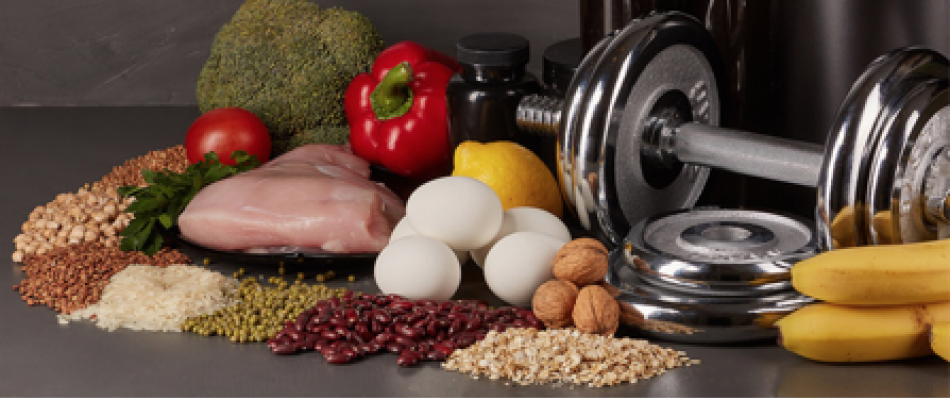
Starting on a weight loss journey is just like learning to do anything else in life – nail the basics first before moving on to more complex concepts. There are a lot of things that can influence the process of fat loss, and it may seem very complicated, but there are steps to organise your priorities to keep it simple and easier to stick to.
The most important thing that should be considered, and will build the foundation of losing weight, will be your energy balance – calories in versus calories out. By no means is weight loss as simple as that, but this is the idea weight loss is built upon. The law of conservation of energy states that energy can neither be created nor destroyed, only transformed into a different state. Your body is transforming energy every day, from potential energy found in food, into kinetic energy to move around, or thermal energy to keep you warm. So a calorie that you body has stored as fat cannot simply disappear, it must be used without being replaced. This happens when calories out are higher than calories in – a calorie deficit. A calorie deficit can be created two ways: eating less or moving more. This will be the foundation of Fat loss program.
Now, this principle works well in a combustion engine, but not as well in the human body. We are not perfect machines and can’t necessarily utilise all the calories in food efficiently. We also expend energy to digest food and have particularly requirements that we need to meet with our diet to functional well. This is where we implement the next factor in dieting decisions – the macronutrient breakdown.
Fat, protein, carbohydrates and fibre are all used differently in the body and have different energy profiles. Fat is the most calorific macronutrient, so having a diet low in fat will reduce calories more drastically than carbohydrates and protein. However, a certain amount of dietary fat is required for proper functioning and fat also has the lowest thermic effect, meaning it requires the least amount of energy to digest. Protein, on the other hand, has the highest thermic effect and is also predominantly used for cell growth and repair; it is the body’s least preferred fuel source. Lastly, protein and fat have been found to be more satiating than carbohydrates, leaving you fuller for longer. Additionally, fibre is also a helpful component to utilise, as it provides no energy but keeps your GI tract healthy and is very satiating. Taking all this into account, a diet high in protein, moderate in fat and moderate in carbohydrate can work well for a lot of people.
Once macronutrients are taken care off, we’re getting down to the nitty-gritty: micronutrients. Vitamins and minerals are essential to our health and deficiencies can affect energy levels, strength, immunity, psychological and cognitive function and hundreds of other bodily functions. With certain exceptions, a sufficient amount of each micronutrient can be reached simply be eating a wide range of fruits and vegetables, along with legumes, seeds, meat and dairy. It is at this point where food quality becomes important, as opposed to food quantity. Body composition can be changed by eating low-nutrient foods such as white bread as long as it is purposeful amounts, however this is not a sustainable dieting model. For continued health as you age and improved athletic performance for those who are eating for this purpose, the micronutrients in whole food will prove to be of great importance.
The least important part of a diet is nutrient timing – adjusting the types or quantities of food across a time period. This can be over a smaller scale, such as a day, or a larger scale, such as a week. For instance, timing more food around workouts as that is when they will be most efficiently utilised and required. Or eating more food on training days and less food on rest days. Or having an implemented diet break, perhaps once a month, where for 3-4 days, overall calories increase for a psychological rest from dieting.
By Daniel Russo
Director and personal trainer at Fighting Fit PT